
Dental Roots and Bruxism - Beat the Grind
With Susie Raso
When people hear the word “bruxism,” many think it simply means grinding your teeth at night. But after years working inside the dental industry, I can tell you this issue goes far deeper than most people realise.
In fact, many people are living with bruxism and don’t even know it.
They clench while working at a computer. They grind during sleep. They tighten their jaw while exercising, driving, stressing, concentrating, or simply trying to get through the day. Some people experience headaches, jaw pain, neck tension, migraines, restricted mouth movement, or even speech and functional changes without ever connecting it back to the jaw itself.
During our recent conversation, Trish admitted her “brain was blown” by how common bruxism actually is, and honestly, that reaction happens a lot when I speak about this topic.
Bruxism Is More Common Than You Think
One of the biggest misconceptions is that bruxism only affects a small number of people with severe stress or obvious grinding habits.
The reality?
Almost everybody experiences some form of jaw clenching or grinding at some point. Some people do it unconsciously during sleep. Others do it throughout the day without awareness. Even children can experience bruxism as they process growth, development, emotions, and environmental stressors.
From a dental perspective, we often see:
flattened teeth surfaces - uneven jaw function
jaw tension - restricted opening
TMJ discomfort
migraines - neck and ear pain - chronic muscle tightness
Traditional dental appliances absolutely have their place, but my passion is helping hypnotherapists explore the deeper unconscious patterns behind the behaviour.
Why Hypnosis Matters
At AHC 2026, I’ll be guiding attendees through a practical process designed to help uncover the emotional and unconscious drivers behind bruxism.
Because underneath many cases of chronic grinding or clenching, there is often:
stress
unresolved emotional tension
internal pressure
nervous system overload
limiting beliefs held within the body
Using a blend of parts work, regression techniques, and hypnotic processes, we can begin teaching the unconscious mind and body that it is safe to let go.
Sometimes the jaw simply needs permission to relax.
And when people experience the process for themselves, they are then able to confidently take those tools into their own client sessions.
This Won’t Just Be Theory
One thing Trish highlighted during our chat was that this session is not just “stand at the front and talk at people” training.
This is experiential.
You’ll feel the process.
You’ll understand the patterns.
You’ll learn practical approaches.
And you’ll walk away with techniques you can begin integrating into your own client work.
Whether you already work with stress, pain, nervous system regulation, trauma, or behavioural habits, understanding bruxism opens another doorway into the mind-body connection.
Let’s Create Real Impact
Bruxism is huge.
It affects adults.
It affects children.
And many people are silently living with the long-term consequences without ever understanding what is happening underneath the surface.
My goal at AHC 2026 is simple:
to help practitioners recognise these patterns, understand the deeper emotional roots, and create meaningful change for clients.
I cannot wait to share this experience with you all.
And as Trish said: “Get your bum on a seat and see Susie.” 😄 https://www.australianhypnosisconference.com/ticket-booth - afterpay option available.
🌏 Join the Experience of Australian Hypnosis Conference
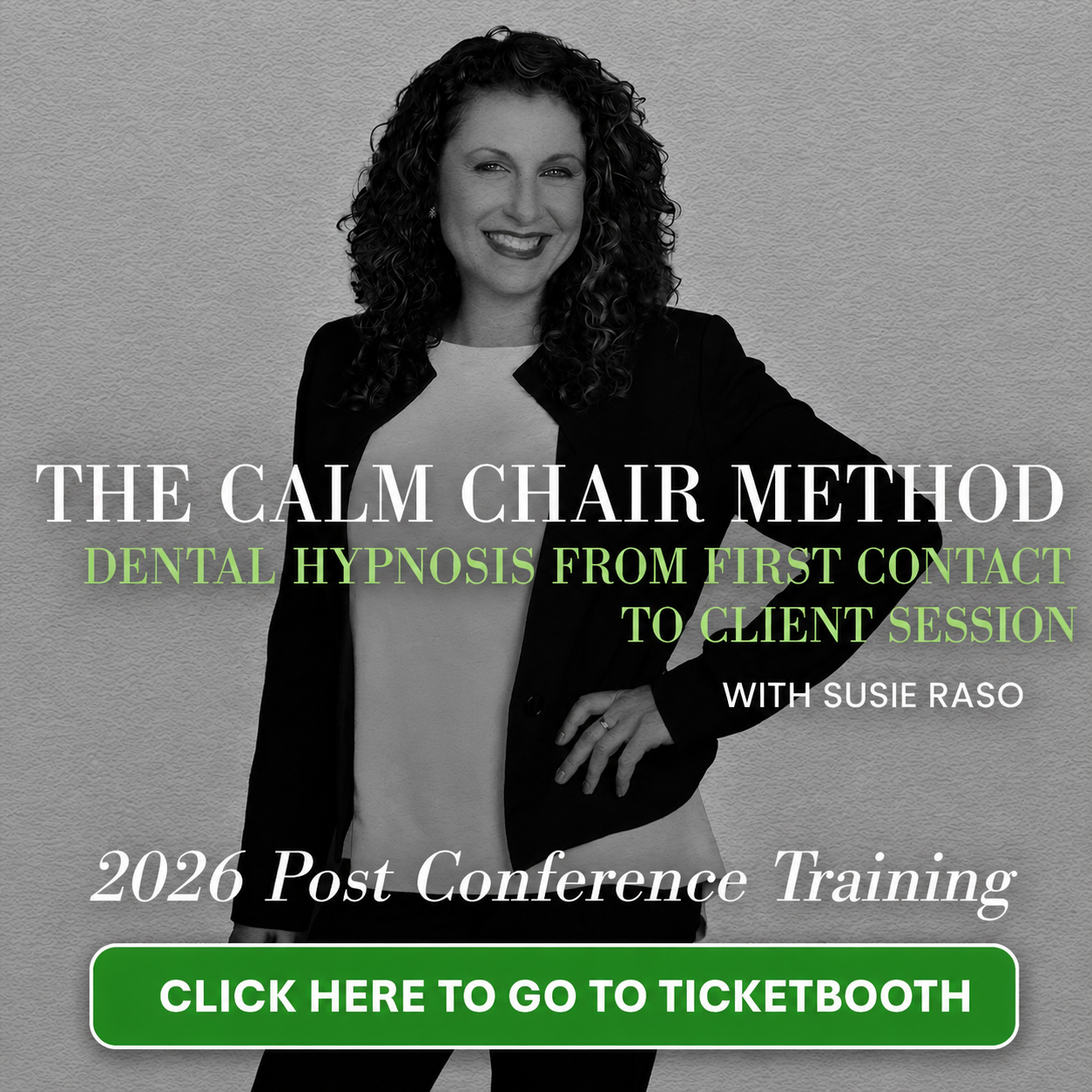
ABOUT THE CALM CHAIR METHOD - Working with dental clients isn’t just about what happens in the chair, it starts long before your client ever walks through your door.
In this hands-on training, Susie Raso walks you through the complete pathway of building a successful dental hypnosis practice, from connecting with dentists through to delivering calm, cooperative client sessions.
You’ll learn how to confidently approach and communicate with dental professionals, position your services in a way that makes sense to them, and create referral relationships that actually stick. No guesswork, no awkward conversations, just a clear, professional approach that builds trust.
From there, Susie takes you step-by-step through your client process, including how to structure your paperwork, prepare your clients effectively, and guide them into a relaxed, receptive state before they even sit in the dental chair.
This training bridges the gap between business and client work, giving you a repeatable system you can use again and again.
Inside this training you’ll learn:
How to approach and network with dentists professionally
What to say (and what not to say) when positioning hypnotherapy
How to create a strong, consistent dental referral system
The essential paperwork and intake process for dental clients
How to prepare clients for dental work before the session
Techniques to create calm, compliant, and confident clients
If you’ve ever wanted to work with dental clients but didn’t know where to start, or you’ve struggled to get traction with dentists, this gives you a clear, structured pathway from first contact to session.
